Choosing a Production Studio in Santa Barbara
What the Santa Barbara studio market looks like
Santa Barbara supports a real commercial production market without carrying the studio inventory of a major city. Brand headquarters on the south coast, a steady wine and hospitality sector, and an outdoor industry presence generate more work than the region's size suggests. What that means practically is that the number of professional stages is small, so the differences between them matter a great deal.
The market splits into two rough groups. There are daylight lofts and converted spaces that suit portrait, lifestyle, and small lifestyle shoots. And there are purpose-built stages with a cyc wall, a lighting grid, and gear on site, which is what commercial and campaign work generally needs.
Stage size and ceiling height
Usable floor area, not listed square footage, is what decides whether your shoot fits. A space measured generously on paper can lose a third of its area to columns, awkward corners, and gear storage. Ask for a floorplan and ask where the equipment lives during a shoot.
Ceiling height carries as much weight as floor space. High ceilings let you light from above, build taller sets, and shoot wide without catching a ceiling line. The largest stage in the Santa Barbara market runs 1,600 sq ft with high ceilings and a rigged grid, which is enough for vehicle-scale product work and multi-setup days.
The cyc wall question
Whether a studio has a seamless cyc, and what kind, is usually the deciding factor. Cyc walls in the local market vary widely in size, and a small cyc constrains how wide you can shoot and how far you can pull the subject off the wall. A corner cyc wraps the curve across two walls, which lets the camera move through a much wider arc without catching an edge.
Colorable walls are the newer capability worth asking about. An RGB cyc puts color-capable fixtures on the wall so the background can be any color, or change color mid-shoot, without gels or a relight. If your creative calls for color, ask whether the wall can be pre-lit before you arrive, because that is typically an hour of the shoot day.
Equipment access in the building
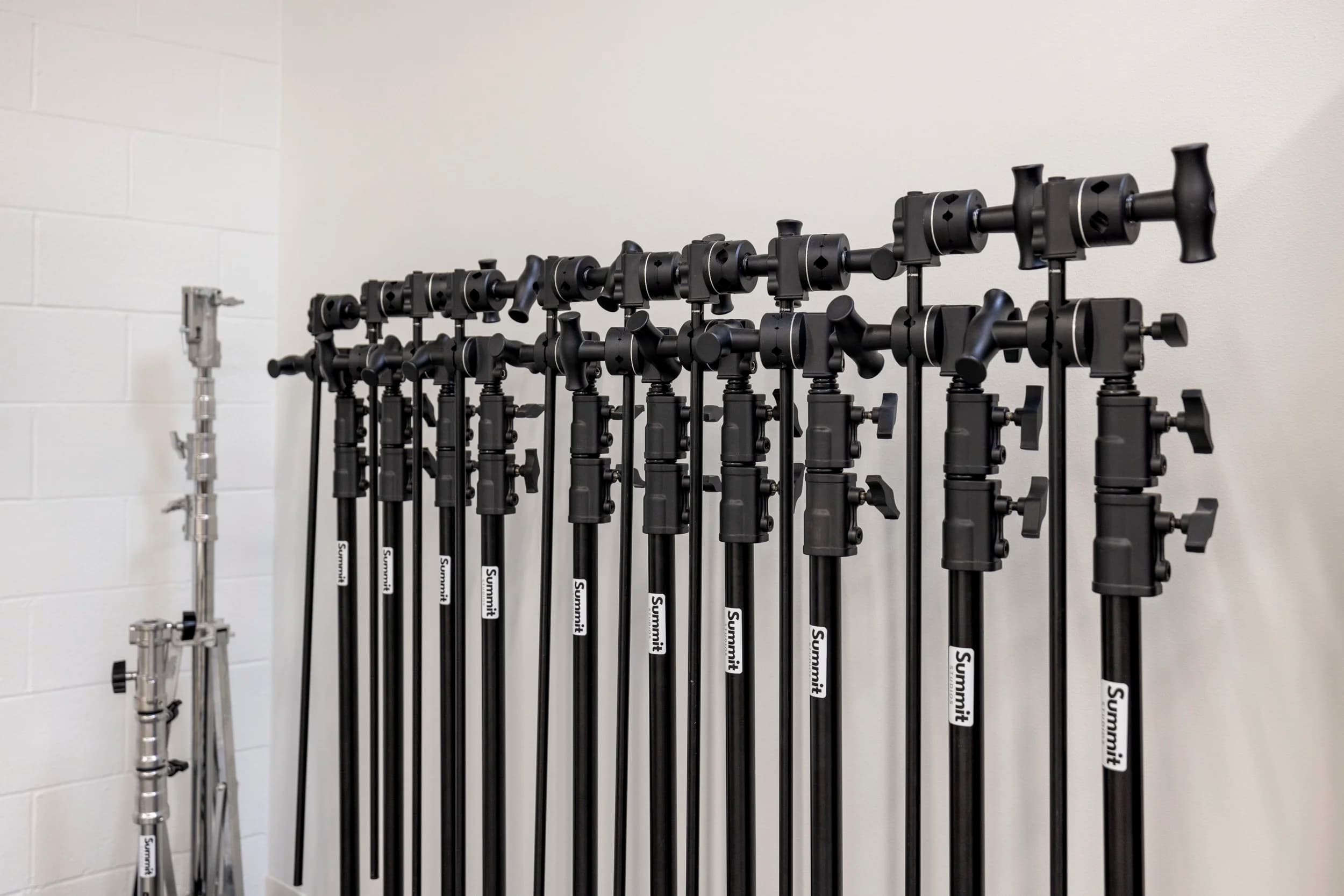
Santa Barbara has fewer rental houses than Los Angeles, which makes on-site inventory more valuable here than it would be in a bigger market. A stage that rents camera, lighting, and grip in the building removes a pickup and a return from the schedule, and it means a missing piece on shoot day is a walk across the floor instead of a lost hour.
Ask which categories are covered and how packages are quoted. At Summit Studios the camera, lighting, and grip inventory is on site and the full list is available on request, built into the quote around what the shoot actually needs. For genuinely specialized items, Los Angeles rental houses deliver up the 101 with a day of notice.
Location and load-in
Location shapes a shoot day more than producers expect. A studio in a residential neighborhood limits noise, hours, and truck access. A downtown location puts lodging, catering, and coffee inside walking distance, which matters at hour seven.
On load-in, the questions that decide your morning are whether there is ground-level access, whether a roll-up door opens onto the floor, and where the crew parks. Stairs and elevators are the difference between a fast load-in and a slow one. Downtown Santa Barbara also has the advantage of untimed street parking on many blocks near the studio district.
What to ask on a tech scout
Walk the space before you book it, and treat the visit as a tech scout rather than a tour. The answers that change your shooting plan are rarely on the website:
- Where does the equipment live during a shoot? Gear parked along a wall eats usable floor and shows up in wide frames.
- Can the HVAC be turned off during takes, and how quickly does the room get uncomfortable when it is?
- What is the actual electrical capacity, and where are the circuits? Ask before you plan a large lighting package.
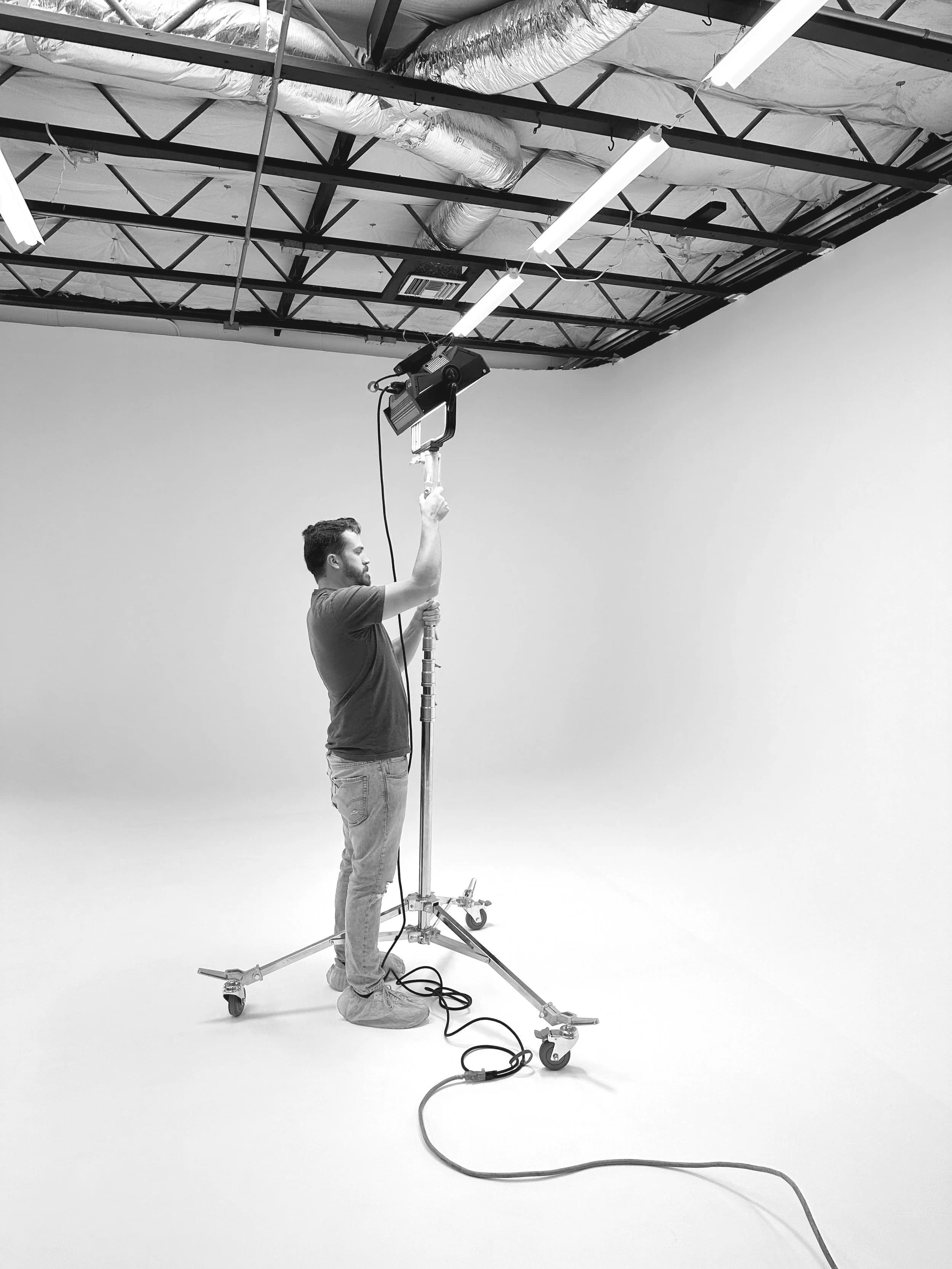
- How high is the ceiling at its lowest point? Ductwork and sprinklers often sit below the stated height.
- Who is on site during the shoot, and can they help if something needs rigging?
- What time does the day actually start and end, and what does overtime cost after it?
If a studio publishes a floorplan, read it before the visit and arrive with your lighting plan roughed in. It turns a walkthrough into a working conversation and usually saves an hour on shoot day.
Matching the studio to the shoot
The right choice depends on what you are making, and the mismatch is what wastes money. Small portrait and lifestyle work is well served by a daylight space with good windows and a simple background, and paying for a full stage there is overkill.
Commercial, campaign, and product work generally needs the opposite: controlled light with no windows fighting you, a seamless background, an overhead grid, and room for a crew and client to coexist. Motion work raises the bar again, because the camera moves and every extra foot of clean background matters. If your shot list includes wide frames, color changes, or a vehicle, the cyc and the square footage stop being luxuries.
What a studio day costs here
Professional stages in the Santa Barbara market generally quote $800 to $1,500 for a ten hour day, with equipment packages priced on top. That sits well below premium Los Angeles stage pricing, which is why LA productions increasingly shoot on the coast. We break the comparison down in LA studio rates versus Santa Barbara, and cover what drives a quote in what photo studio rental costs.
When you request a quote, include shoot type, crew size, whether you need the cyc, equipment needs, and your dates. Studios that price to the production rather than off a flat card can usually shape a package to a real budget.
Frequently asked questions
What is the largest production studio in Santa Barbara?
The largest professional stage in the Santa Barbara market is 1,600 sq ft, located downtown at Summit Studios on Olive Street, with a corner RGB cyc wall and equipment rental on site.
How much does a production studio cost per day in Santa Barbara?
Professional stages in the market typically run $800 to $1,500 for a ten hour day, with camera, lighting, and grip quoted separately based on what the production needs.
Do Santa Barbara studios have cyc walls?
Some do, and the sizes vary considerably. The largest in the market is a corner cyc that can be pre-lit with color-capable fixtures, which allows any background color without gels or a relight.
Do I need a permit to shoot in a Santa Barbara studio?
No. Permits apply to public property such as streets, beaches, and parks. Shooting inside a studio or on private property with permission requires no city or county film permit.
Can I rent camera and lighting gear in Santa Barbara?
Yes. Full-service stages keep camera, lighting, and grip inventory on site and quote it with the stage, and Los Angeles rental houses deliver specialty items with about a day of notice.