What Is a Cyc Wall? A Filmmaker's Guide to Seamless Backdrops
What a cyc wall actually is
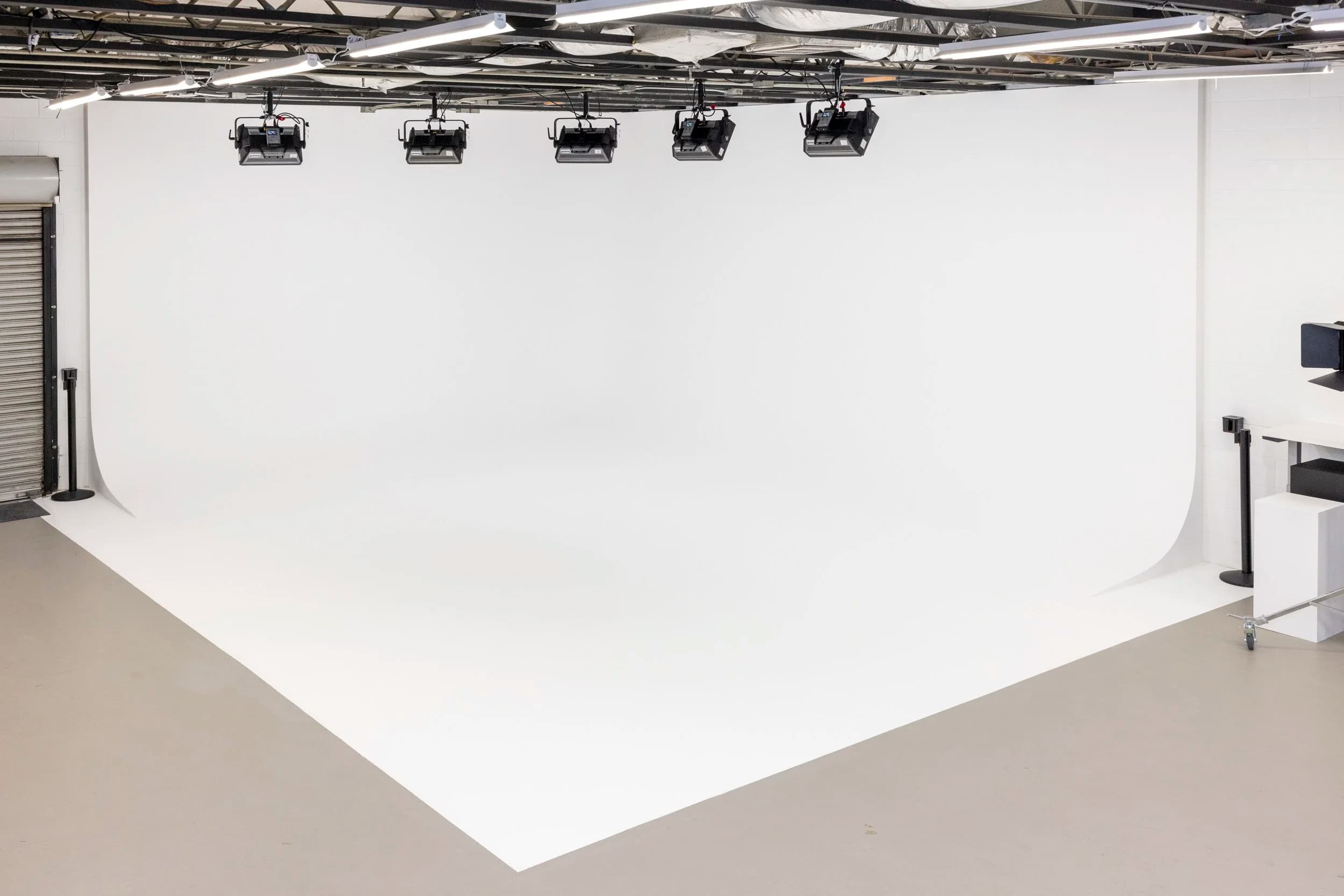
A cyclorama is a rigid wall built with a smooth radius where it meets the floor, so the background reads as one continuous surface on camera. There is no baseboard, no seam, and no corner shadow. Shot wide, a lit cyc looks like the set extends forever, which is why the look is often called an infinity wall. Unlike seamless paper, a cyc never wrinkles, never needs re-rolling, and can take real weight standing against it.
Corner cyc vs straight cyc
A straight cyc curves along one wall only, which limits you to shooting square at the wall. A corner cyc wraps the radius across two adjoining walls and the corner between them, so the camera can move through a much wider arc without ever catching an edge. That matters for motion work, where the camera rarely sits still, and for photo days that need multiple setups without moving the whole set. Corner cycs are rarer because they are harder to build, which is why studios that have one lead with it. The corner RGB cyc at Summit Studios is the reason productions book the stage.
What shoots use a cyc for
- Product photography and video, where the object needs to float on a clean background
- Fashion and lookbooks, full-length frames with no floor line
- Commercials and brand spots, especially car and bike work where the subject is large
- Interviews and corporate video, when the brand wants a clean, colorable environment
- Dance and movement, where performers need a floor and a background that read as one space
Pre-lit and RGB cycs
Lighting a cyc evenly is a craft of its own, and it is the first hour of most cyc shoot days. A pre-lit cyc removes that hour: the wall wash is already rigged and dialed before you load in. An RGB cyc goes further by putting color-capable fixtures on the wall, so the background can be any color, or shift colors mid-shoot, without gels or a relight. Summit's corner cyc is pre-lit with five Aputure Nova RGBWW panels, which means the wall can hit any color the art director names before the first setup.
Cyc sizes and what they let you shoot
Cyc dimensions decide your framing more than any other spec. The two numbers that matter are the width of the wall and how far you can pull the subject away from it. Distance is what lets you light the background separately from the subject, which is how you get a clean white that does not spill onto skin, or a deep color that does not contaminate the foreground.
Small cycs, in the range of ten to twenty feet wide, handle single-subject portraits and product work well and start to fight you the moment you frame wide or add a second person. Larger walls open up full-length fashion, group shots, and vehicle work. A corner configuration effectively widens the usable area again, because the seamless surface continues around the turn instead of ending at a hard edge.
Lighting a cyc: white, black, and color
Getting a cyc to read as pure white takes more light on the wall than most people expect, typically one to two stops brighter than the subject. Under-light it and white turns gray. The wash needs to be even across the whole surface, which is why studios mount fixtures in a row at a consistent distance rather than lighting the wall with a single source.
Pulling a black or dark background from a white cyc is the opposite exercise: kill all spill on the wall, move the subject well forward, and flag the light tightly. It works, though a genuinely black background is easier on a dedicated dark surface. Color is where RGB fixtures change the day, since the wall can shift hue between setups in seconds instead of requiring a gel change across every unit.
How a cyc is built and maintained
A cyc is a permanent architectural feature, not a piece of set dressing. The curve is formed in plaster or a rigid composite over a framed substrate, then skimmed and sanded until the transition from wall to floor is invisible to a camera. The radius has to be consistent, because any waver in it catches light and reads as a line in the frame.
Maintenance is why cyc stages carry a premium. The surface takes foot traffic, cart wheels, tape, and the occasional dropped stand, so studios repaint regularly, often between significant bookings. Scuffs are normal and expected. Gouges into the radius are a real repair rather than a touch-up, which is why studios ask crews to keep street shoes off the curve and to check before rolling anything heavy across it.
Alternatives to a cyc, and when they work
A cyc is not the only way to get a clean background, and for smaller work it can be more than you need:
- Seamless paper. Cheap, available in many colors, and swappable in minutes. It wrinkles, tears under foot traffic, and needs replacing, which makes it best for tight single-subject setups.
- Fabric backdrops. Portable and forgiving to travel with, but they crease and rarely light as evenly as a hard surface across a wide frame.
- Painted flats. Useful for building a specific look, though you lose the seamless floor transition that makes a cyc read as infinite.
- Digital extension. Effective in post, but it moves cost and time downstream and needs careful lighting on the day to key or track cleanly.
The rule of thumb: if the frame includes the floor, or the subject is full length, or the camera moves, a cyc earns its cost. If you are shooting tight on a seated subject, paper will do.
How to treat a cyc on set
Cyc etiquette is mostly about protecting the radius. Keep street shoes off the curve, tape nothing to the wall face, and ask the studio before rolling anything heavy across it. Scuffs happen and studios expect routine repainting, but a gouged radius is a real repair. When in doubt, ask the studio manager. A good stage would rather answer questions than sand plaster.
Frequently asked questions
What does cyc stand for?
Cyc is short for cyclorama, a term theater borrowed from panoramic painted backdrops. In studios it means a wall that curves seamlessly into the floor.
What is the difference between a cyc wall and a green screen?
A cyc is a physical seamless background you light and shoot as-is, while a green screen is a keying surface you replace in post. Many cycs get painted or lit green when a shoot needs both.
Is a cyc wall better than seamless paper?
For most professional work, yes. A cyc never wrinkles or tears, handles foot traffic, and lights more evenly across a wide frame. Paper still wins for quick color swaps in small setups.
Can you drive a vehicle onto a cyc?
On stages built for it, yes. Drivable cycs support cars, motorcycles, and bikes for automotive-style shoots. Always confirm weight limits with the studio before planning vehicle work.
How is a cyc wall lit?
With a row of wash fixtures set an even distance from the wall, top-mounted, floor-mounted, or both, so the surface reads as one tone. Pre-lit cycs come with this rig already installed and balanced.