Planning a Photo Shoot in Santa Barbara: A Producer's Guide
Do you need a permit to shoot in Santa Barbara?
For public property, yes. Commercial photography and filming on city streets, beaches, and parks requires a film permit from the City of Santa Barbara, and county locations run through the county film office. Processing is generally measured in days, not weeks, but build lead time into the schedule. Two situations skip the permit entirely: shooting on private property with the owner's permission, and shooting inside a studio. That is one reason studio days anchor so many Santa Barbara productions: the paperwork disappears.
When to schedule around the marine layer
The marine layer is the coastal fog bank locals call May Gray and June Gloom. In late spring and early summer, beach mornings are often overcast until late morning or midday, then burn off to full sun. Plan accordingly:
- Golden-hour beach work is most reliable in fall, September and October especially
- In May and June, schedule exteriors for afternoon and keep mornings flexible
- Overcast mornings are a gift for soft, even portrait light, if the creative allows it
- When a specific look must happen on a specific date, plan a studio fallback
Location ideas by look
- Coastline: Butterfly Beach, Leadbetter, and Hendry's for sand, cliffs, and pier lines
- Spanish Revival: the courthouse and downtown's white stucco and red tile
- Industrial and urban: the Funk Zone's murals, warehouses, and alleys
- Mountains and ranch: the Santa Ynez foothills, twenty minutes from downtown
- Controlled studio: a cyc stage downtown when the background needs to be nothing at all
What the permit process involves
For public property, the process is more administrative than difficult. City locations run through the City of Santa Barbara and county locations through the county film office, and both want the same core information: where you are shooting, when, how many people and vehicles, and what you are doing that might affect the public.
Two requirements catch first-time producers. Permits generally require a certificate of insurance naming the permitting agency, which takes a day or two to arrange if you do not already carry production coverage. And anything involving street closures, drones, generators, or amplified sound adds review time and sometimes additional sign-off. Apply earlier than feels necessary, and confirm turnaround with the office rather than assuming.
Building a weather contingency
The most common local failure is a schedule with no fallback. Coastal weather does not usually cancel a shoot, but it routinely changes what is possible in a given hour, and a plan that only works in sun is a plan with one point of failure.
Two contingencies cover most situations. The first is a reordered shot list: keep a set of frames that work in flat overcast light so the crew has something productive to shoot while you wait. The second is a studio hold. Booking a stage for the second half of a location day, or having one available on short notice, converts a weather problem into a schedule adjustment. On multi-day shoots with talent flying in, that hold is usually cheaper than the risk it removes.
When to move the shoot into a studio
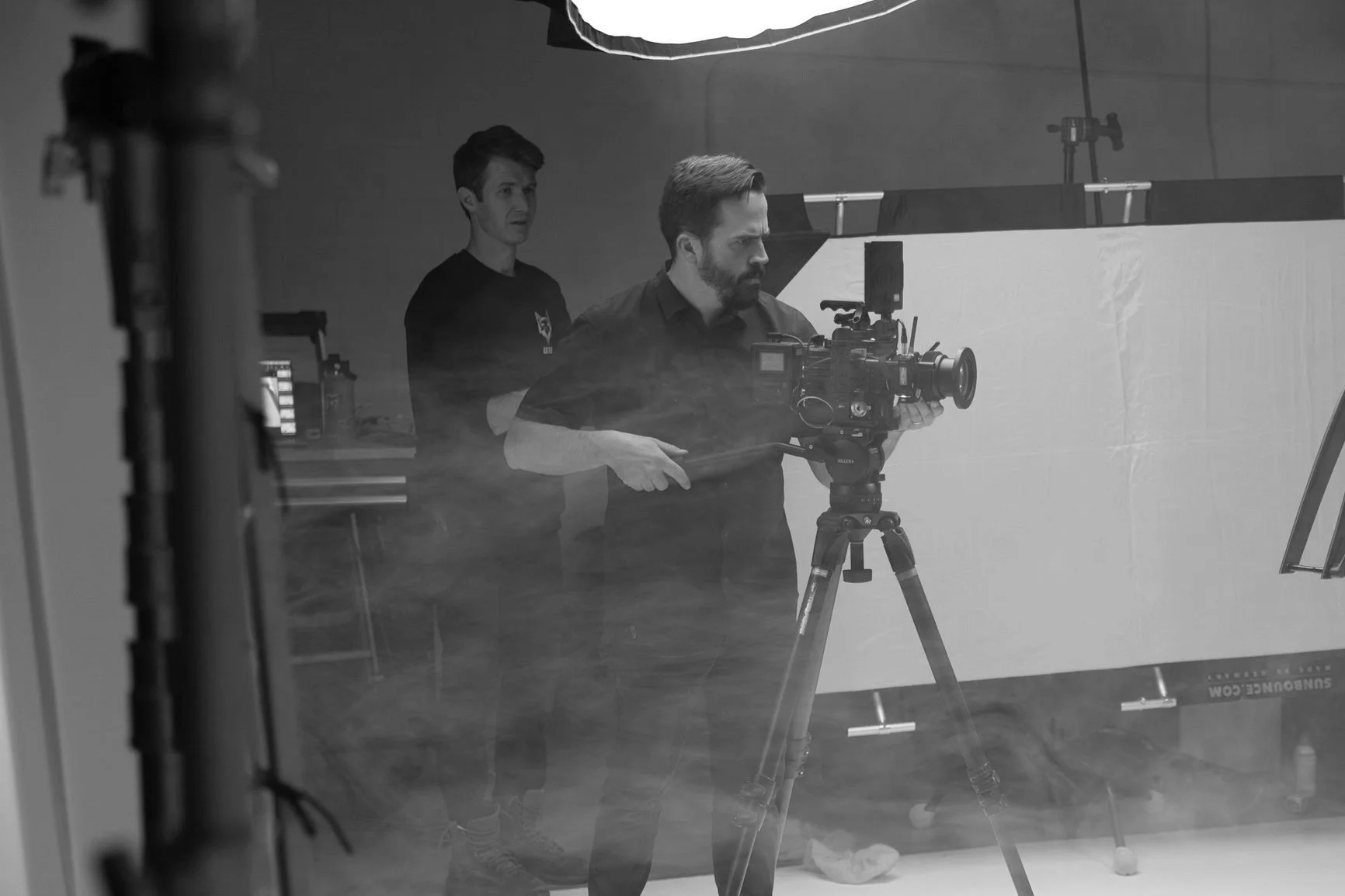
Studios earn their day rate when risk gets expensive. Move inside when the shot list needs consistent light across many setups, when talent or product schedules cannot absorb a weather delay, or when the creative calls for a seamless background no location can give. A stage like Summit Studios, with a 1,600 sq ft floor, a corner RGB cyc, and gear in the building, lets a crew run photo and video setups all day without touching a permit or watching the sky.
Building a shoot day that survives contact
Santa Barbara rewards a schedule built around light rather than convenience. If the creative wants warm low sun, you have roughly an hour at each end of the day, and everything else has to be planned around those two windows. Shoot the light-dependent frames first, then move to setups that tolerate any conditions.
Leave real margin between locations. The city is compact, but parking near the waterfront and downtown can absorb twenty minutes you did not budget, and a crew moving gear on foot moves slowly. Producers who work here regularly plan two locations a day rather than four, and finish on time more often than the ambitious version of the same schedule.
Hiring crew and vendors locally
The local freelance pool covers the core departments, seeded over the years by Brooks Institute alumni who stayed on the coast, and it is deep enough for most commercial work. For larger builds, Los Angeles crew day-play on Santa Barbara productions routinely, and the drive is short enough that it does not automatically trigger a hotel night.
Vendors follow the same pattern. Catering, hair and makeup, and production assistants are all available locally, while specialty rental gear usually comes up from Los Angeles with a day of notice. Book local crew earlier than you would in a bigger market, since the pool is smaller and the good people are spoken for quickly in peak season.
What a Santa Barbara shoot day costs to staff
Beyond the stage or the permit, the budget is mostly people and time. A minimal commercial photo day runs a photographer, an assistant, and someone handling hair and makeup. Add a digital tech when the client needs to review captures live, a stylist when wardrobe matters, and a producer once the day involves more than one location or more than a couple of talent.
Crew rates here track other California markets rather than undercutting them, so the savings against Los Angeles show up in the stage, the parking, and the logistics rather than in labor. The most reliable way to control a shoot budget locally is to compress the schedule: a well-planned single day with a tight shot list almost always costs less than two loosely planned ones, and the work is usually better because the crew stays sharp.
Local logistics that make the day easier
Santa Barbara is a compact production town. Downtown puts lodging, catering, and coffee within walking distance of the studio district, and street parking near Olive Street is untimed, which crews notice by hour six. If you are bringing a package from LA, the drive is roughly 90 minutes up the 101 outside rush hour. Loading through a ground-floor roll-up door, rather than an elevator, is the difference between a 20-minute load-in and an hour.
Frequently asked questions
Do I need a permit for a photo shoot on a Santa Barbara beach?
Yes, commercial shoots on public beaches require a film permit from the city or county depending on the beach. Private property and studio shoots do not need one.
What is the best time of year for a photo shoot in Santa Barbara?
September and October offer the most reliable light: warm, clear, and free of the spring marine layer. Spring and summer work well too if you schedule exteriors for afternoons.
What is the marine layer?
A coastal fog bank that covers Santa Barbara mornings in late spring and early summer, usually burning off by midday. Locals call it May Gray and June Gloom.
How much does a studio day cost in Santa Barbara?
Professional stages in the Santa Barbara market typically run $800 to $1,500 for a 10-hour day, well below premium Los Angeles stage pricing.
Can I shoot photo and video on the same day?
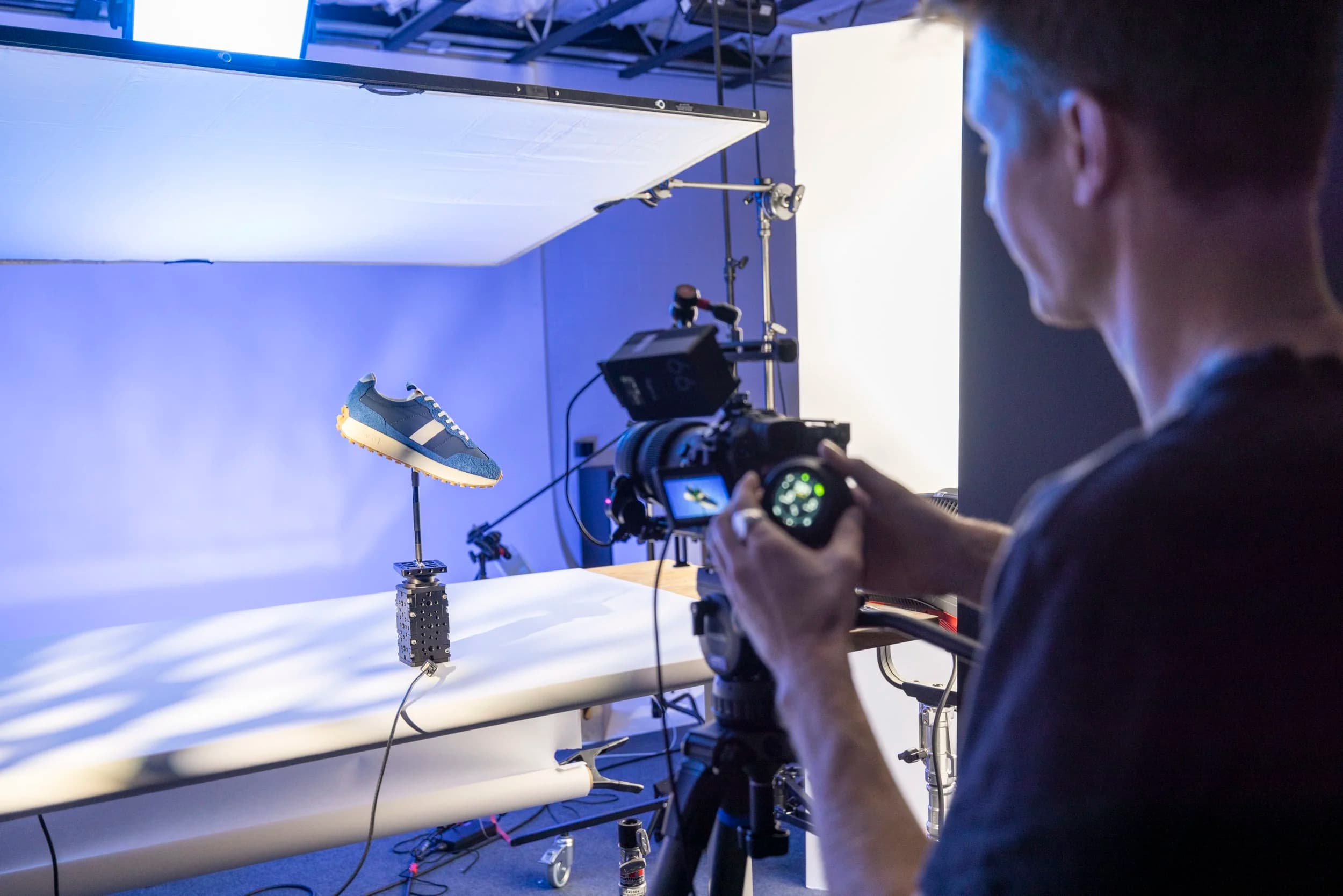
Yes, on a stage set up for both. A pre-lit cyc and on-site grip and lighting let crews swing between stills and motion without a re-rig, which saves a full day on many productions.