Why LA Production Teams Are Booking Studios in Santa Barbara
The budget math
Start with the stage. Premium Los Angeles studios, the Milk and Smashbox tier, price flagship stages at several thousand dollars per day, and even mid-market LA stages command a premium for the zip code. A comparable professional day in Santa Barbara runs $800 to $1,500. Against that gap, the cost of moving a crew 90 miles, mileage, maybe a hotel night for a big build, is small. On a typical one-day commercial shoot, the stage savings alone can fund the entire equipment package.
The logistics are genuinely easier
- The drive: roughly 90 minutes from the west side up the 101, against traffic in both directions
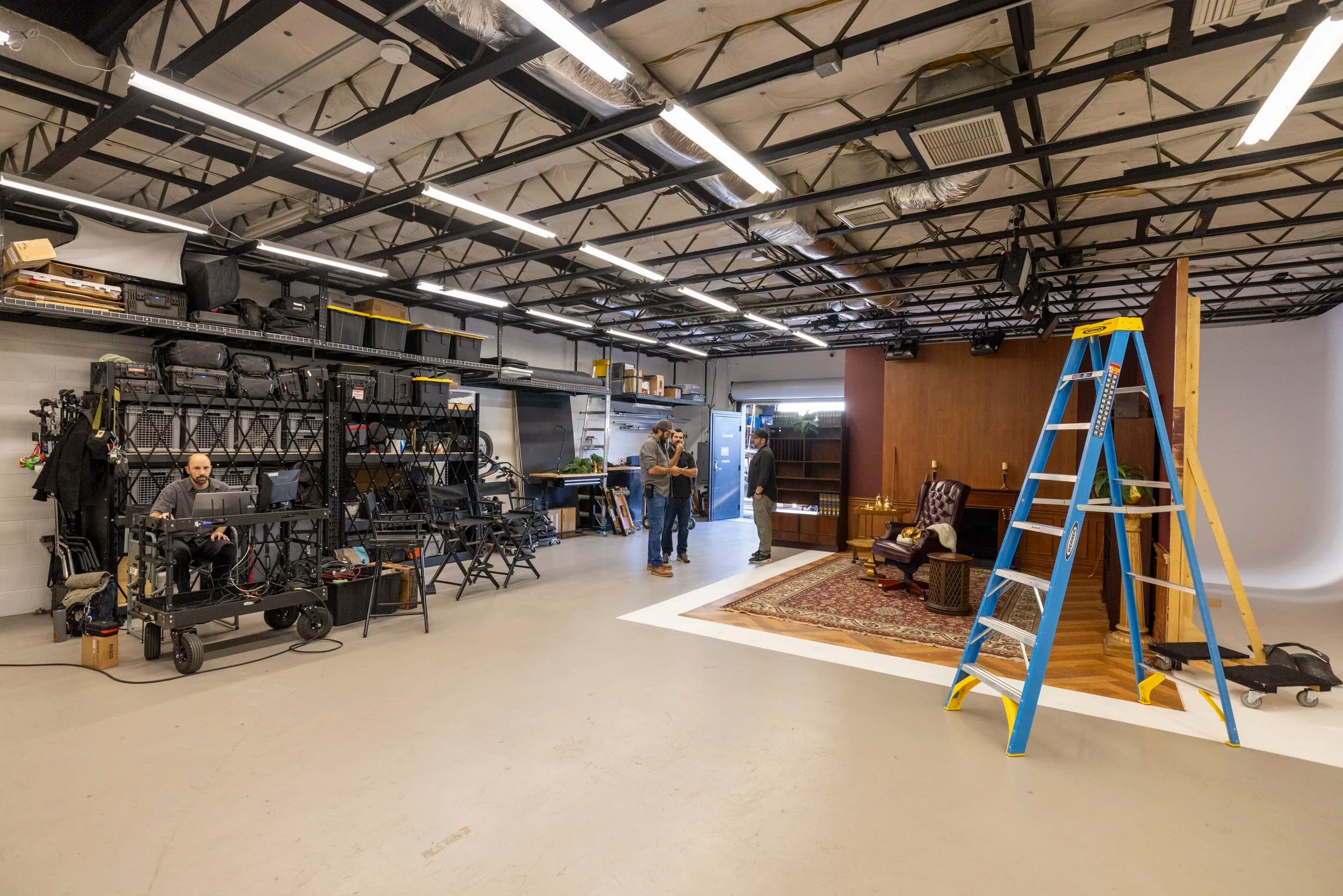
- Load-in: ground-floor roll-up door access at a stage like Summit, no dock scheduling, no freight elevator
- Parking: off-street spots at the studio and untimed street parking around it
- Permits: none needed for studio work, and the local permit office moves fast if you add an exterior day
- The neighborhood: downtown Santa Barbara, with lodging, catering, and coffee in walking distance
What a full-service Santa Barbara stage includes
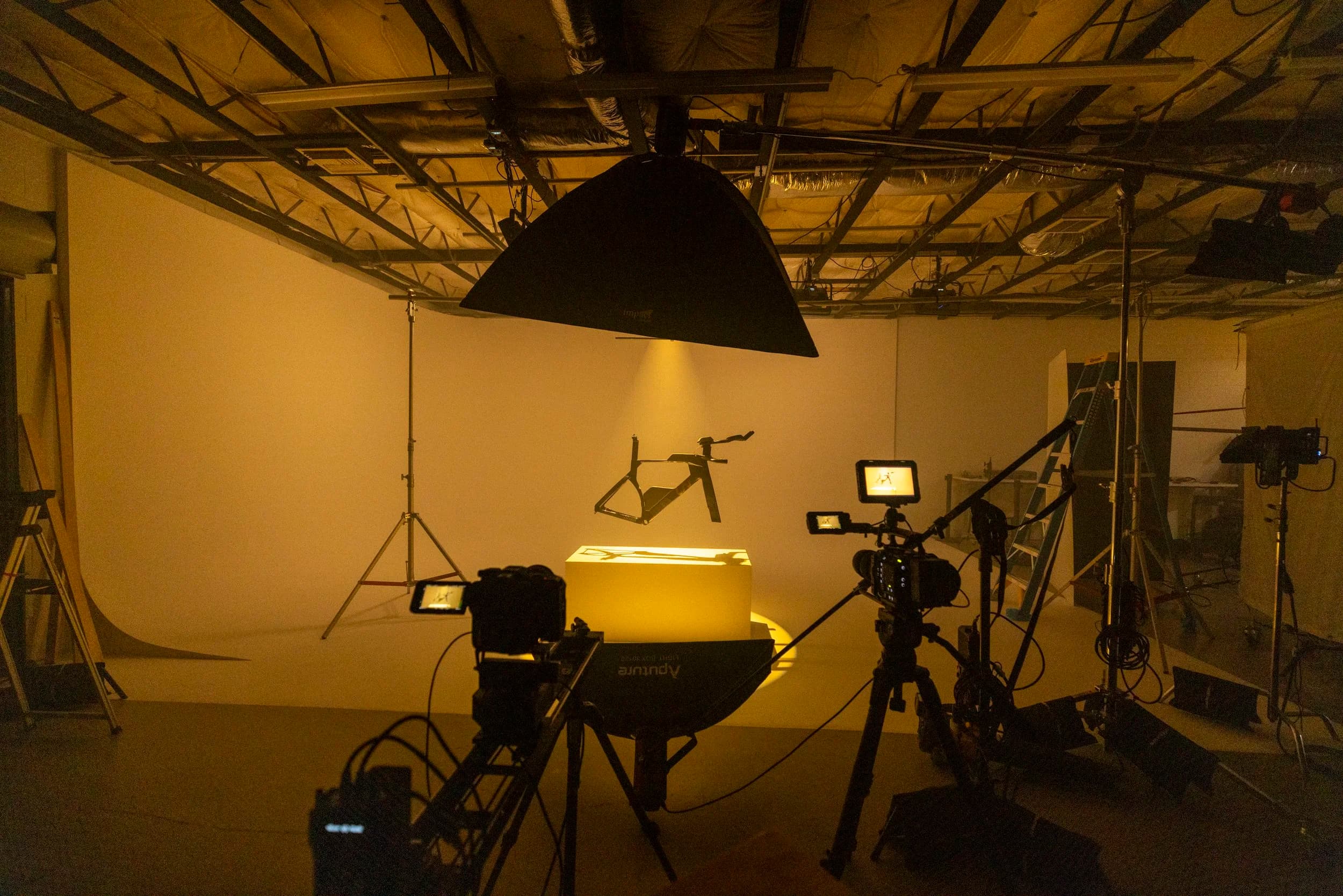
The worry LA producers voice first is gear: nobody wants to truck a full package north. A full-service stage answers it. Summit Studios keeps camera, lighting, and grip rental in the building, and the corner cyc is pre-lit with five Aputure Nova RGBWW panels. Crews bring glass and specialty items and rent the rest on site. For anything exotic, LA rental houses deliver to Santa Barbara with a day's notice.
Getting your client to say yes to the drive
The objection is almost never the money, it is the unfamiliarity. Clients who have approved Los Angeles stages for years hear a different city and assume added risk. The way through it is specifics rather than enthusiasm.
Show them the floorplan and the stage dimensions so the space stops being abstract. Name what is on site: the cyc, the grid, the camera, lighting, and grip inventory, the parking, the client lounge. Put the drive in terms they already accept, since ninety minutes up the coast is often less door-to-door time than crossing Los Angeles at the wrong hour. Then show the number. Once the stage is concrete and the savings are on the page, the decision usually makes itself.
Scheduling a scout before you commit
For a first booking, treat the drive up as a scout rather than a leap of faith. Walking the floor answers the questions that photographs never quite settle: how the cyc reads at the width you plan to shoot, where the equipment sits during a shoot, how the load-in path runs from the door to the set.
Bring your lighting plan roughed in and the shot list in hand. A studio that knows the room can tell you in twenty minutes whether your plan works as drawn, and the adjustments you make in that conversation are the ones that would otherwise cost an hour on the day.
When staying in LA makes sense
Honesty helps here. Stay in Los Angeles when the shoot depends on same-day casting availability, when you need a specialty stage (process trailers, water tanks, massive builds), or when key stakeholders can only attend between other LA commitments. Santa Barbara wins on cost, calm, and coastal looks. It does not replicate LA's depth of specialized infrastructure, and pretending otherwise would waste your scout day.
What to bring and what to rent on arrival
The instinct is to truck everything, and it is usually wrong. Camera bodies, lenses, and anything the DP is particular about should travel with the crew, because those are the items where a substitute changes the look. Almost everything else is cheaper and easier to draw from the studio's inventory once you arrive.
Lighting and grip are the clearest case. Stands, flags, modifiers, and wash fixtures are heavy, slow to load, and largely interchangeable between manufacturers. Renting them at the stage removes a van, a load-out, and a return trip from the schedule. Send the studio your lighting plan in advance and ask what they can cover, then bring only the gap.
Travel, lodging, and the real overhead
For a single day shoot, most crews treat Santa Barbara as a drive rather than a trip. Leaving Los Angeles early puts you at a downtown load-in comfortably, and the drive home after wrap runs against traffic in both directions. That keeps the added overhead to mileage and a longer call.
Multi-day shoots change the math slightly and usually still favor the move. Downtown hotels sit within a few minutes of the studio district, which shortens the morning commute compared with crossing Los Angeles. Budget lodging for the crew you actually need on the floor rather than the full list, and remember that the stage rate savings on a two day booking typically cover a meaningful share of the rooms.
A first-booking checklist
If you have never shot outside Los Angeles with this crew, a short list removes most of the friction from the first attempt:
- Send the studio your shot list and lighting plan a week out, and ask what they can cover from inventory.
- Confirm the call time against the drive rather than the clock. Leaving before rush hour is the difference between arriving fresh and arriving late.
- Ask where crew parks and whether the load-in path has any steps, turns, or width limits.
- Arrange the certificate of insurance early, since studios require one and it is the most common day-of holdup.
- Confirm exactly when the day starts and ends, and what overtime costs past it.
- Get a phone number for whoever is actually on site during the shoot, not just the booking contact.
Almost every problem on a first out-of-town booking traces back to one of those six items. Settle them in advance and the day runs like any other.
Making the day work
The standard pattern for LA crews: leave by 6:30 am, load in at 8:30, shoot the 10-hour day, and be back over the hill by 9 pm. For two-day shoots, downtown hotels put the crew five minutes from the stage. Some producers schedule the drive as the tech scout, arriving the afternoon before to walk the space. Ask the studio for a floorplan in advance, Summit publishes theirs, and pre-build the lighting plot so the first hour on the floor is setup, not discovery.
Frequently asked questions
How far is Santa Barbara from Los Angeles for a production?
About 90 miles up the 101, roughly a 90-minute drive from the west side outside peak traffic. Crews routinely do it as a day trip for single-day shoots.
How much cheaper is a Santa Barbara studio than an LA studio?
Santa Barbara professional stages typically run $800 to $1,500 per day, while premium LA stages price at several thousand. The gap usually exceeds all travel costs combined.
Can I rent camera and lighting gear in Santa Barbara?
Yes. Full-service stages like Summit Studios rent camera, lighting, and grip on site, and LA rental houses deliver specialty items with a day's notice.
Does Santa Barbara have a cyc wall studio?
Yes. Summit Studios operates a pre-lit corner RGB cyc on the largest professional stage in the Santa Barbara market.
When should a production stay in LA instead?
When the day depends on same-day casting, specialty stages, or stakeholders who cannot leave the city. For self-contained shoots, the move north usually pays for itself.